
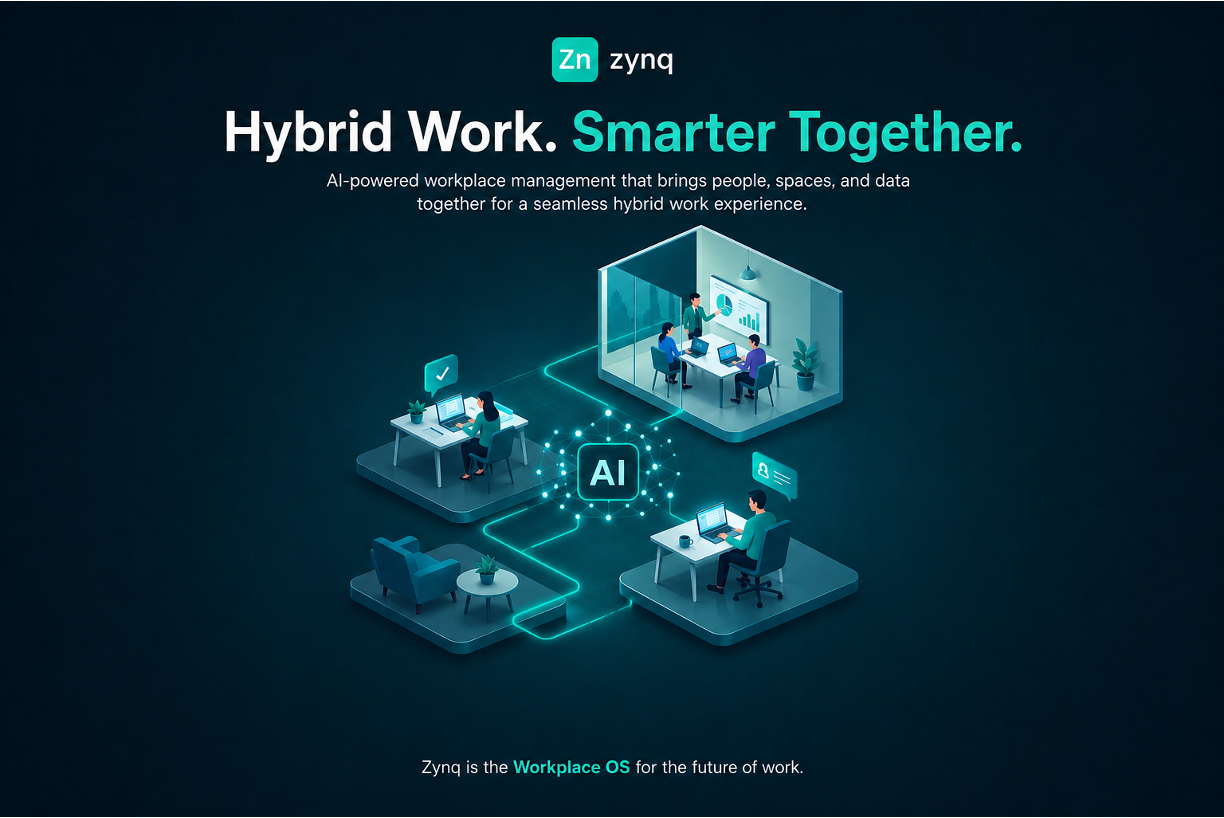
The Future of Work Isn’t Remote or Office. It’s Hybrid — and AI Is Accelerating It.
The future of work isn’t remote or office—it’s hybrid. But hybrid is broken without the right systems. As AI accelerates individual productivity, organizations need a new coordination layer to bring people, spaces, and decisions together.
Over the last few years, we’ve all lived through one of the biggest workplace experiments in history. Pre-COVID, work was mostly office-first. During COVID, we swung hard to remote.Post-COVID, we saw a push back toward the office. It felt like a pendulum - one extreme to another. But if you zoom out, something more important happened. We didn’t just change where we work. We fundamentally changed how we work. And now, with the rapid rise of Generative AI, that shift is becoming permanent.
What I’m Seeing First-Hand
In my own experience—both building products and working with teams—one thing has become very clear: You can do more individually today than ever before. AI has changed the equation. Tasks that used to take hours now take minutes.
Research, coding, writing, analysis — everything is faster. In fact, 75% of knowledge workers are already using AI tools regularly .
That’s not a trend. That’s a shift. But here’s the interesting part. Even as individual productivity has gone up… the importance of collaboration hasn’t gone down. If anything, it has increased.
The Paradox of AI: More Individual Power, More Need for Teams
AI makes individuals more powerful. But companies don’t win because individuals are productive. They win because teams are aligned. And alignment doesn’t happen in isolation.
It happens through spontaneous conversations, whiteboard sessions quick decisions in a room and shared context that’s hard to replicate digitally This is where fully remote starts to break down. And this is where fully in-office feels unnecessary. Which brings us to the inevitable conclusion: The future is hybrid.
The Data Is Already Clear
This isn’t just opinion—it’s backed by what employees and companies are actually doing.
- 6 in 10 employees prefer hybrid work over fully remote or fully in-office
- 64% of companies already operate in a hybrid model
- 90% of hybrid employees say they are as or more productive
- 73% report higher productivity with flexible work, gaining ~1 full day per week
And perhaps the most telling stat:
60% of workers would consider leaving their job if flexibility is removed
This isn’t a perk anymore. It’s an expectation.
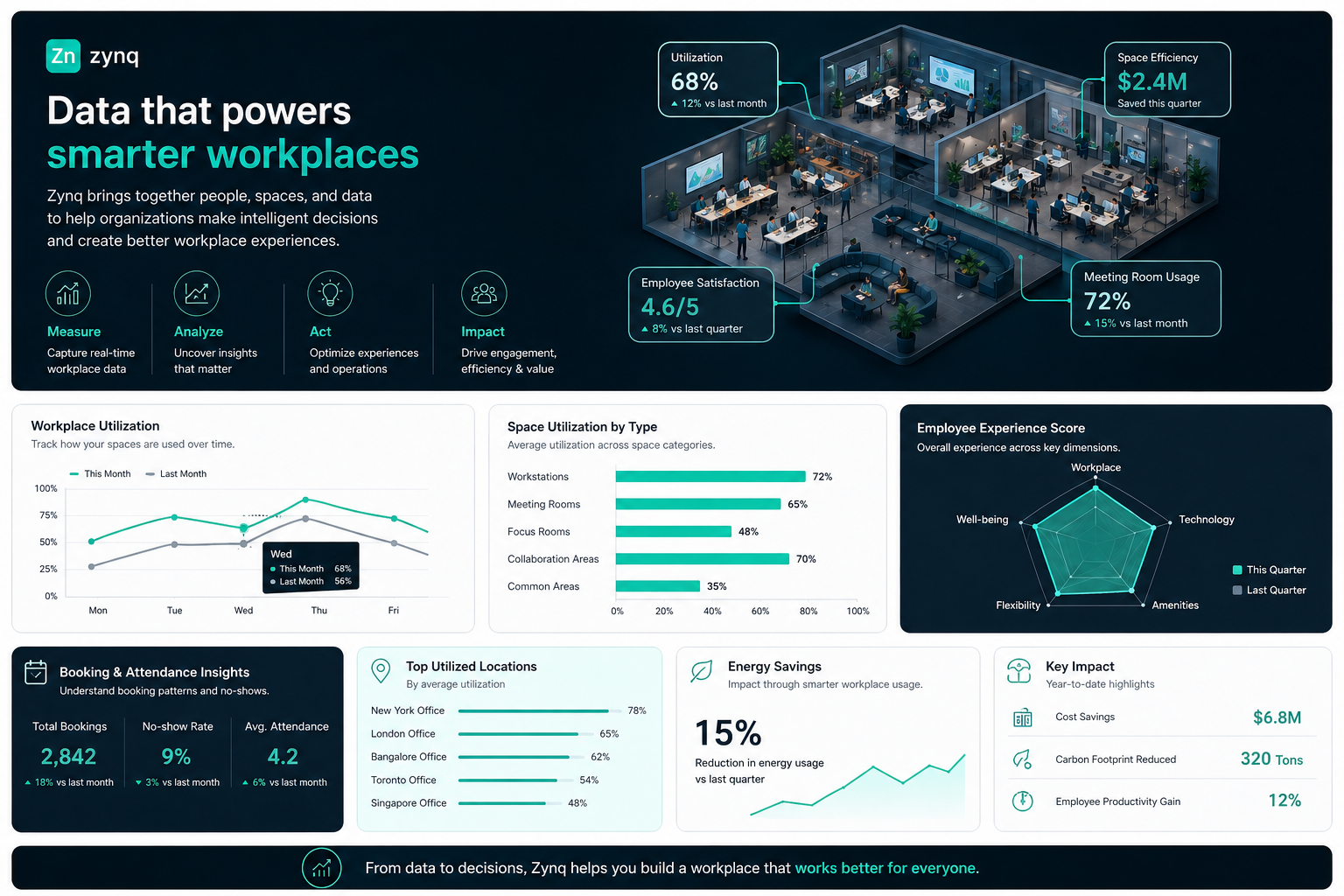
Why Hybrid Wins (Especially in an AI World)
Hybrid is not a compromise. It’s an optimization.
- AI makes remote work incredibly efficient : Deep work, execution, focus—these thrive in remote settings.
- Innovation still needs in-person energy : The best ideas rarely come from scheduled Zoom calls.They come from hallway conversations, team off-sites and unplanned interactions
- Talent expectations have changed permanently : Flexibility is now tied to retention, engagement and employer brand
- AI is increasing the volume of work, not reducing it : Ironically, AI is not just saving time—it’s expanding what’s possible.
We’re seeing - more communication, more collaboration and more decisions which makes structured in-person time even more valuable.
The Real Problem: Hybrid Is Hard
If hybrid is the future… why does it still feel messy? Because most companies are still operating with tools designed for either fully remote or fully in-office. Not both.
We’ve all felt this in one form or another—walking into the office not knowing who’s in, struggling to find the right space, sitting through inefficient meetings, and seeing large parts of the workplace go underutilized, all while lacking clear visibility into how teams are actually working. The problem isn’t hybrid. The problem is that we haven’t built the right systems for it.
This Is the Shift We’re Entering
We’re moving into a world where: (a) AI handles execution (b) humans focus on collaboration and decision-making and (c) the workplace becomes a coordination layer—not just a location
And in that world: The office is no longer where work happens It’s where the most valuable work happens
Why This Matters (And Why Now)
As we move past the COVID hangover and fully embrace AI, the question is no longer: “Should we be remote or in-office?”
That debate is over. The real question is: How do we design work for a hybrid, AI-first world? Because the companies that figure this out will: (a) attract better talent (b) move faster (c) collaborate better (d) and ultimately win
Where This Is Going
This is exactly why I’ve been spending time thinking deeply about workplace systems. Because if hybrid is the future, then: We need infrastructure that makes hybrid actually work.
Not just tools. Not just policies. But intelligent systems that understand how teams work, optimize for collaboration and make the workplace feel seamless
Closing Thought
We’re not going back to the old world. Not fully remote. Not fully in-office.
We’re entering something new.
A world where :
- AI amplifies individuals
- hybrid enables teams
- and the companies that balance both will define the next decade
